
Parent Guide
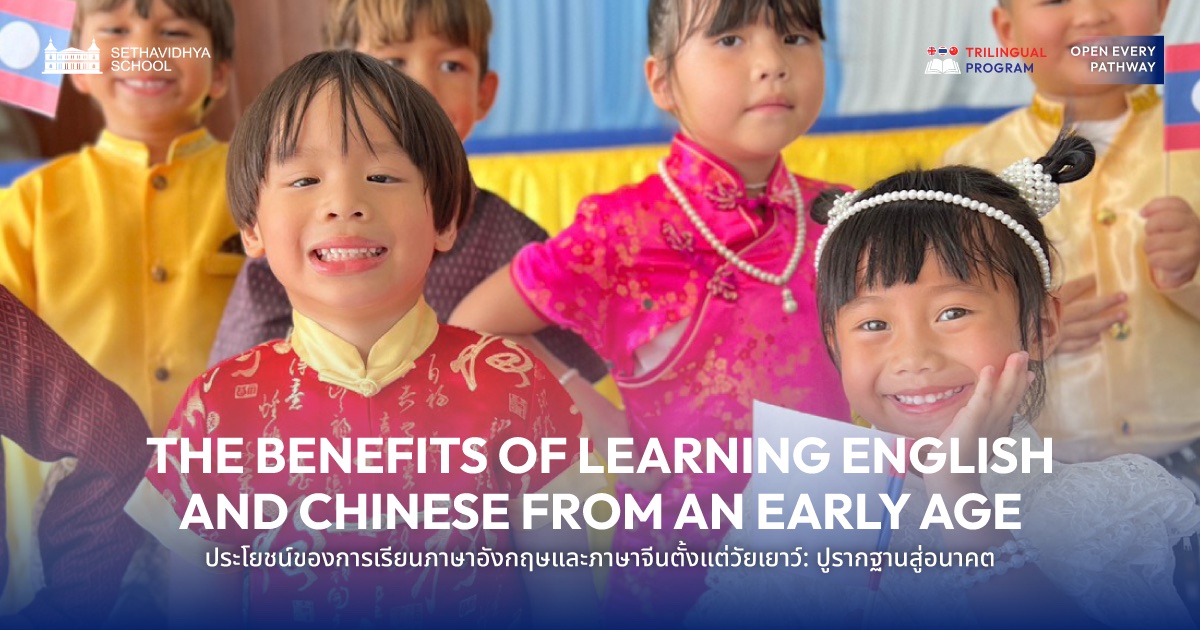
The Benefits of Learning English and Chinese from an Early Age
Early childhood through primary school represents the critical biological window for language development. Introducing foreign languages during these formative years allows children to acquire authentic pronunciation, natural sentence flow, and deep cultural intuition effortlessly.
For families exploring an English Program in Hua Hin or looking to introduce Chinese Language for Children, understanding the science behind early Language Acquisition and Brain Development highlights why an early start delivers lifelong advantages.
1. The Neuroscience of Early Language Learning
During early childhood, the developing brain exhibits remarkable neuroplasticity. Young learners possess an innate sensitivity to process tonal variations (essential for Mandarin Chinese and Thai) and phonetic distinctions in English. As highlighted by developmental neuroscientist Patricia Kuhl (2010, Neuron), early dual-language exposure shapes neural circuitry during critical learning windows, supporting children’s control of attention.
2. Immersion vs. Rote Learning: The Acquisition Advantage
Young children do not learn languages through abstract grammatical rules; they absorb language through daily context, dialogue, and practical application:
- Core Academics in English: Mathematics, Science, and fundamental subjects are taught in English using internationally recognized Marshall Cavendish academic materials, benchmarked to the Anglia programme (England) / CEFR standards.
- Timetabled Mandarin Chinese Instruction: Structured weekly classes immerse students in conversational vocabulary, phonetics (Pinyin), and character recognition without causing linguistic overload.
3. Active Learning: Building Courage to Communicate
Fluency requires practice without fear of making mistakes. As the recipient of the “Best Active Learning School” award at the World School Summit (chosen from 200+ schools across 45+ countries), Sethavidhya fosters interactive, project-based environments where students actively use English and Chinese in teamwork and presentations.
4. Individualized Support with an ~8:1 Ratio
Language development requires frequent verbal interaction and gentle phonetic guidance. Maintaining an average student-to-teacher ratio of about 8:1 (~8:1) ensures our educators provide personalized feedback to nurture every student’s expressive confidence from Pre-School to Primary 6.
Unlocking Global Opportunities (Open Every Pathway):
Introducing English and Mandarin Chinese from an early age builds natural multilingual fluency and cognitive resilience, equipping young learners to succeed in any local or international secondary pathway.
Give Your Child a Multilingual Advantage at Sethavidhya School Hua Hin
We invite parents to visit our campus and explore our supportive, active learning environment.
(Office Hours: Monday – Friday, 08:00 – 17:00)
Contact our admissions team today to book a tour or inquire about our admissions process!