
Project work · 26 June 2026
Kindergarten scientists take on the balloon challenge
Our K2 classes explored air pressure with fizzy balloon experiments, recording and presenting every result in English.
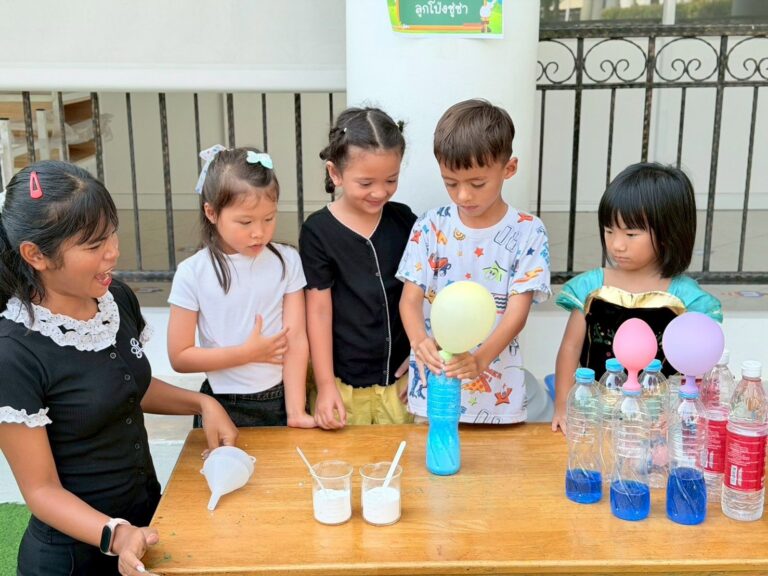
This week our K2 classrooms turned into little laboratories. Armed with bottles, balloons, vinegar and baking soda, our five- and six-year-olds set out to answer a big question: can a gas blow up a balloon without anyone touching it?
Working in small teams, the children measured out baking soda with teaspoons, poured vinegar into their bottles, and stretched balloons over the tops. The fizzing started immediately, and so did the squeals. As the balloons slowly stood up on their own, so did twenty very excited scientists.
“By the third try, they were adjusting the amounts themselves and explaining why the balloon grew faster.”
— K2 lead teacher
True to our English-rich classrooms, every team recorded their observations in English, practising new vocabulary like “expand”, “gas” and “reaction” before presenting their results to the class.
Hands-on projects like this sit at the heart of our inquiry-based approach: children learn by predicting, testing, being wrong, and trying again — the exact habits that carry them through Primary and beyond.
The balloons have long deflated, but the questions have not stopped. Next up for K2: sink or float?